
5 Common Interview Mistakes That Can Ruin a Great Soundbite
Media training tips from Laura Podesta, Former CBS News Correspondent turned Media Trainer
11/3/20265 min read
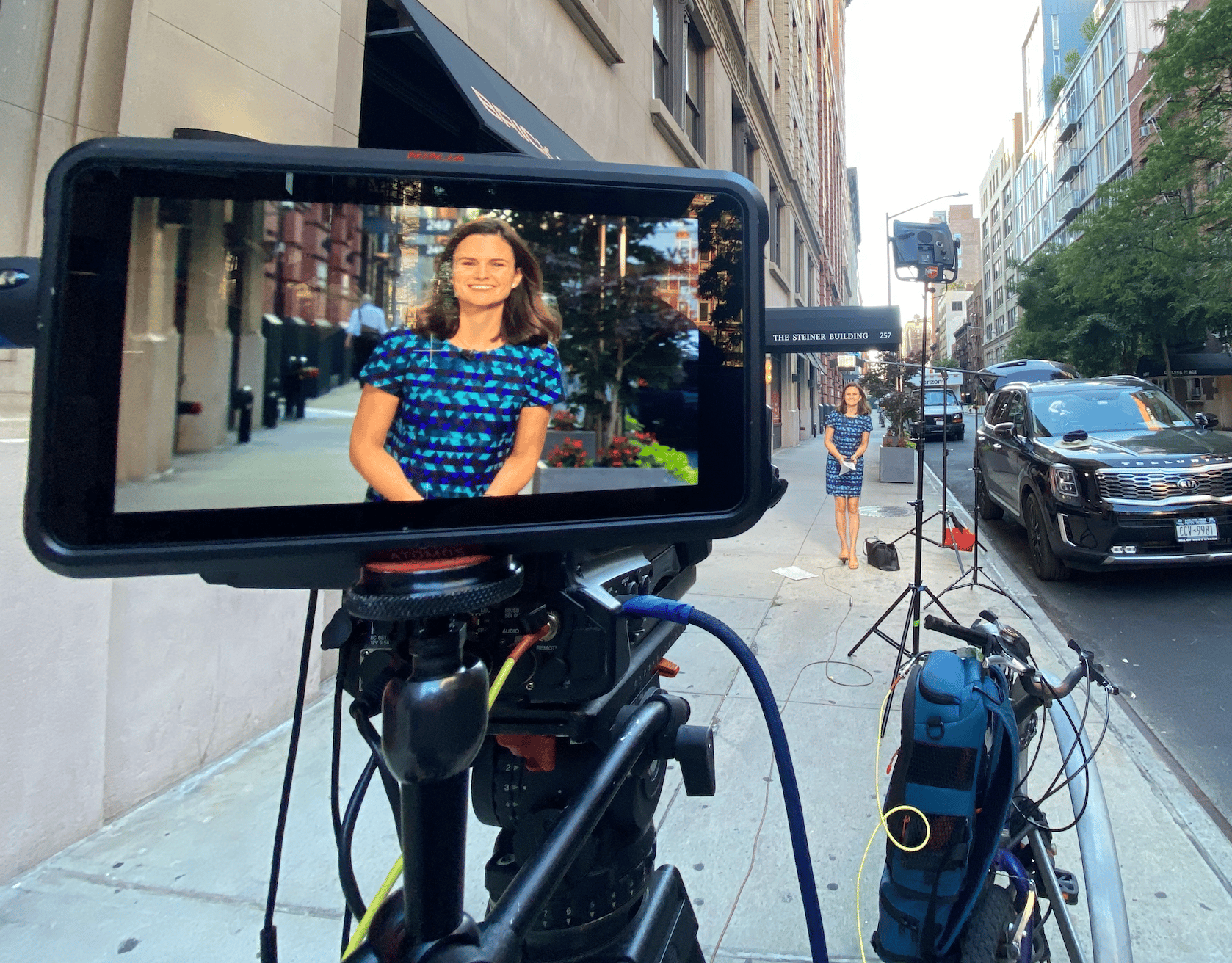

When I was reporting for CBS News, I'd often do a quick pre-interview with the person I was about to interview. Just a casual conversation about what we'd discuss once the cameras started rolling.
Then, when the photographer hit "record" and I asked a similar question, I'd sometimes get a response like:
"As we were discussing before..."
"I mentioned it earlier, but..."
"You've already heard me say this..."
And just like that, a potentially great soundbite became unusable (or at least a headache for the editor!).
Here's the problem: I may have heard the answer before, but the audience watching at home had not.
I recently shared this media training tip on LinkedIn, and it sparked a really interesting conversation in the comments among journalists, television producers, editors, and communications professionals.
Turns out, there are quite a few seemingly harmless habits that can make a great interview difficult to use.
Here are five worth knowing before your next media appearance.
1. Don't assume your audience knows what you know
This is the big one, and something I remind my media training clients all the time.
When you're being interviewed, it's easy to forget that the journalist sitting across from you isn't your actual audience. The thousands (or potentially millions!) of people who will eventually watch, read, or listen to the story are.
They weren't there for your pre-interview. They haven't read your company's background materials. And they probably don't know nearly as much about your industry as you do.
One communications professional who commented on my LinkedIn post made an especially interesting observation: this is even more important today, when interviews are frequently chopped into short clips and shared on social media.
Someone might encounter just 20 seconds of your interview on LinkedIn, Instagram, or TikTok. If you begin with "As I mentioned earlier," you've immediately made that viewer feel like they've missed part of the conversation.
My media training tip: Treat every answer as though it's the first thing your audience is hearing from you. Give people enough context to understand your point without needing to hear the rest of the conversation.
2. Stop addressing the journalist by name
This was one of my favorite insights from the comments because it's something people do with the best intentions.
A former television journalist pointed out that interview subjects would sometimes address her by name in the middle of an otherwise fantastic soundbite.
Something like:
"Well, Laura, that's exactly why we started this company..."
In everyday conversation, using someone's name can make you seem warm, personable, and engaged.
But in a television interview, it can make your answer more difficult to edit into a story.
Why? Because the reporter might want to use your soundbite without including their own question or appearance. Suddenly, the viewer hears you addressing someone named Laura who isn't part of the finished segment.
It's not necessarily a dealbreaker, but it creates an unnecessary editing challenge.
My media training tip: Be conversational, make eye contact, and connect with the journalist. But when answering on camera, avoid inserting the interviewer's name into your response.
3. Incorporate the question into your answer
Several people in the comments brought up another excellent piece of advice: make your answer stand on its own.
For example, imagine a journalist asks:
"Why did you decide to launch your company?"
You could answer:
"Because I saw how many small businesses were struggling to find affordable solutions."
That's a perfectly reasonable response in conversation.
But if an editor wants to use that clip without the journalist's question, the audience might not immediately understand what you're talking about.
A stronger response would be:
"I launched my company because I saw how many small businesses were struggling to find affordable solutions."
Now the answer makes sense all by itself.
This is something I practice with clients during mock interviews. The goal isn't to mechanically repeat every question. It's to deliver a complete thought that can stand on its own.
My media training tip: Before answering, think about whether someone could understand your response without hearing the question that prompted it.
4. Know when to stop talking.
People often become uncomfortable with silence and keep talking long after they've already delivered a great answer.
I've seen this countless times.
Someone delivers a clear, compelling 20-second response. It's exactly what the journalist needs.
But instead of stopping, they keep going.
They add another example. Then another explanation. Then a qualification. And eventually, the original message gets buried.
One producer also pointed out how difficult it can be to edit responses when someone constantly connects thoughts with "and," "but," or "so," or ends every sentence with "right?"
Those little verbal habits make it harder to find a clean beginning and ending for a soundbite.
This is why I love practicing the same answer with my media training clients in 60 seconds, then 30 seconds.
More often than not, the shorter version is better.
My media training tip: Deliver your headline, support it with a compelling example, and then stop. A pause doesn't mean you've failed to answer the question. It often means you've answered it well!
5. Save your best answers for when the camera is rolling
One of the more interesting discussions in the comments came from journalists and producers who shared different approaches to pre-interviews.
Some said they avoid discussing the actual interview topic before recording begins. Instead, they'll chat about the weather, sports, or anything else while the crew sets up.
Why? Because sometimes the best, most spontaneous answers come out before anyone has pressed record.
And getting someone to repeat that same answer with the same energy and authenticity can be surprisingly difficult.
Other producers explained that pre-interviews are an essential part of their process, especially for longer-form corporate storytelling. They use those conversations to identify stronger questions and uncover more emotional or meaningful stories.
Both approaches make sense, depending on the format.
But there's an important takeaway for anyone being interviewed: Don't treat the conversation before the cameras roll as the actual interview.
If you've already shared a great story during a pre-interview, be prepared to tell it again with the same enthusiasm once recording begins.
Remember, it's not a repeat for the audience. They're hearing it for the first time.
The bigger lesson: Great communication starts with your audience
What I loved most about the discussion on LinkedIn was how many people, from television journalists to corporate communications leaders, had experienced the exact same challenges.
And while these examples largely come from television interviews, the lessons apply far beyond the newsroom.
If you're speaking on a panel, giving a presentation, appearing on a podcast, or answering questions during a company town hall, remember that your audience may not have the same context you do.
What feels obvious to you might be completely new to them.
What feels repetitive to you might be the most important thing they're hearing for the first time.
And what feels like a small habit could be the difference between a message that lands and one that gets lost.
The best communicators don't just think about what they want to say. They think about what their audience needs to hear.
That's a lesson I learned during my years as a television journalist, and one I now bring into every media training and public speaking coaching session.
So the next time you're preparing for an interview, presentation, or speaking engagement, ask yourself one simple question:
What does my audience not know yet?
Start there.
Laura Podesta is a former CBS News national correspondent and BBC contributor who spent more than a decade reporting for national and local television stations, including ABC 7 Chicago. Today, she draws on her experience in broadcast journalism to help business leaders, founders, and professionals become more confident, compelling communicators through media training, public speaking coaching, and executive communications coaching.
To book a session with Laura, visit this page.
Join the mailing list for public speaking tips, exclusive offers, and updates.
© 2026. All rights reserved. Laura Podesta Media is an SBA-certified Women-Owned Small Business (WOSB)