
What SXSW EDU Taught Me About Public Speaking (And Why Even Speakers Get Nervous)
How I used my 3P Method (Prep, Presence, Pause) to overcome nerves and deliver a public speaking session at SXSW EDU.
Laura Podesta
3/11/20263 min read
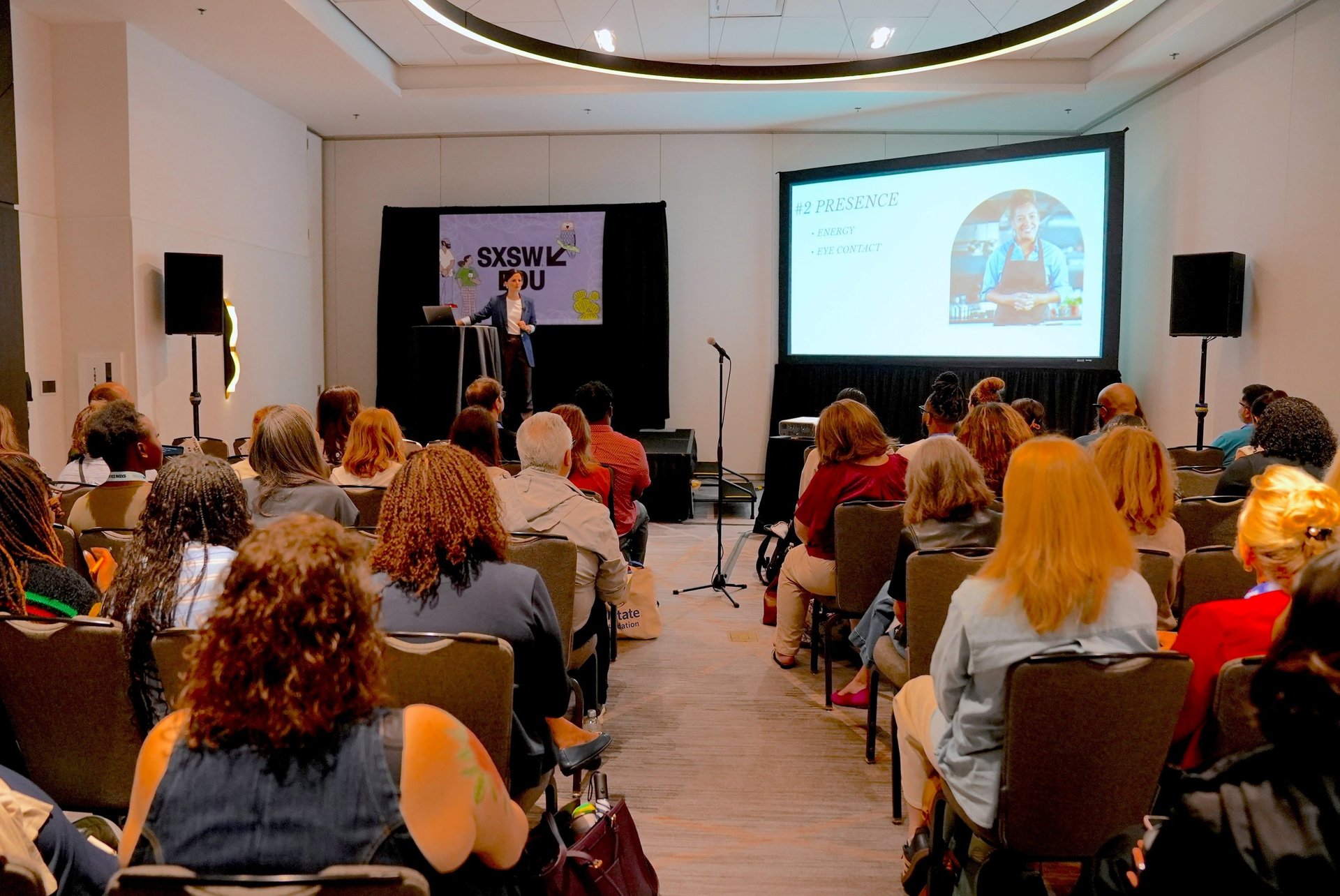
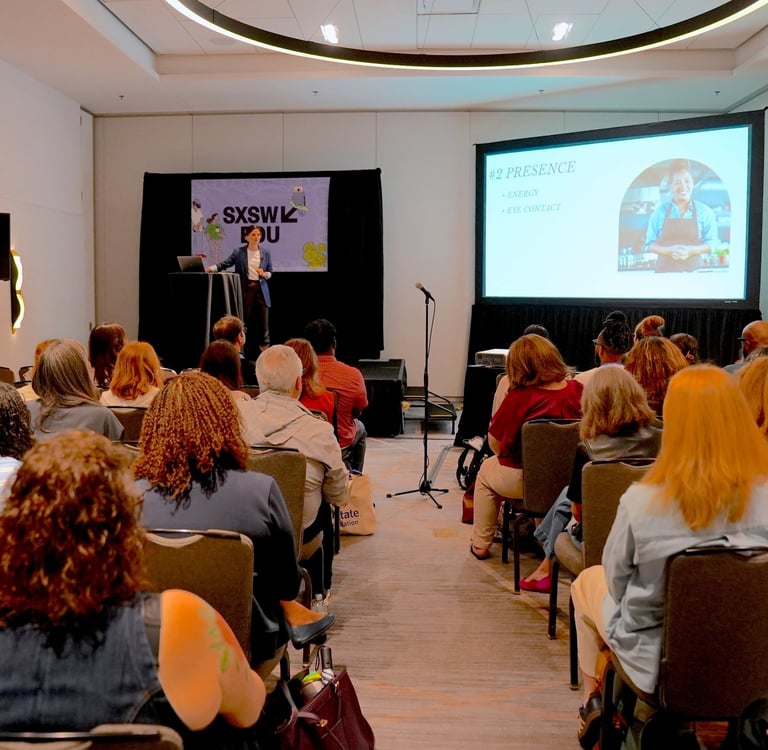
I recently had the opportunity to lead a session on public speaking and presentation skills at SXSW EDU in Austin.
The room was full. The microphone was on. And I felt… nervous.
Which is ironic, because I’m a public speaking coach and media trainer who spent more than a decade reporting live on national television.
But here’s something I tell my coaching clients all the time: nerves don’t disappear when you become a professional speaker. You simply learn how to work with them.
That’s exactly why I teach what I call the 3P Method for confident communication:
Prep. Presence. Pause. It’s a framework I developed after years of appearing on camera as a correspondent for CBS News and later coaching executives, founders, and professionals preparing for media interviews, investor pitches, and keynote presentations.
And standing backstage at SXSW EDU, I used the exact same method.
The Moment Before You Walk On Stage
Even after hundreds of live television appearances, the seconds before speaking can still feel intense. At SXSW EDU, I remember thinking:
Is this going to land? Will people actually find this helpful?
The funny thing about public speaking anxiety is that it often shows up when we care deeply about the message we want to share. But instead of trying to eliminate those nerves, I leaned on the same framework I teach my clients!
The 3P Method for Public Speaking Confidence
1. Prep
The first “P” is preparation. Preparation isn’t just typing out bullet points and printing out the script. It’s physically writing notes (the memory-muscle connection is real!) and then speaking it aloud as many times as you’re able.
When I coach executives or founders preparing for presentations or media interviews, we spend a lot of time simply rehearsing. If you can’t do the whole speech, at least get the first 30 seconds nearly memorized. When you first open your mouth and begin your talk stress levels are highest, so you’ll want it to be words you’ve said before and heard your voice saying before. The first time you hear yourself saying words that you want to land well – should not be ON the stage, during the live event.
Great speakers aren’t born.
They’re prepared.
2. Presence
The second “P” is presence.
Presence is the ability to show up as your full self in front of an audience. It’s how you convey energy through your voice. Book a session with me to go in depth with this. Of course it’s also your pacing, your body language, and your eye contact.
This is especially important in on-camera appearances, media interviews, and virtual presentations.
In my work as a media training coach, I often see professionals focus entirely on the words they’re saying.
But communication is much bigger than words.
3. Pause
The third “P” might be the most underrated communication skill of all. Pause. Silence is powerful.
In television news, silence can feel terrifying. Dead air is something reporters try to avoid at all costs.
But in public speaking and presentations, pauses are essential. They allow the audience to absorb what you just said. (If you’re rushing from point to point, listeners get overwhelmed, and then what do they do next? Tune you out.) Give your audience a moment to digest your message before you move onto your next thought.
During my SXSW EDU session, I intentionally paused after key ideas.
And something interesting happened.
Instead of feeling awkward, the pauses actually pulled the audience in.
The Truth About Becoming a Better Speaker
One of the biggest myths about public speaking is that some people are simply “naturally good at it.” This can’t be further from the truth. Great communicators have simply spent years refining their skills.
They’ve practiced. They’ve spoken in rooms that were half empty. To their spouse. To their mirror. To me.
Experiences like SXSW EDU remind me why communication skills matter so much.
Whether you’re delivering a keynote, appearing in a media interview, pitching investors, or presenting at work, the ability to communicate clearly can change the trajectory of your career.
Final Thought
Before I stepped onto the stage at SXSW EDU, I felt nervous. After the session ended, dozens of people came up to talk about their own fears around speaking.
And that’s when I realized something important.
The goal of public speaking isn’t to eliminate nerves. The goal is to have a framework that helps you move forward anyway. For me, that framework is simple:
Prep. Presence. Pause.
Three steps that can help anyone become a more confident communicator.
If you’re looking to improve your public speaking or media interview skills
I work with founders, executives, and professionals through 1:1 public speaking coaching and media training sessions available via Zoom worldwide or in person in New York City and Boston. Can’t wait to work with you!